Modern lifestyles in Singapore place immense, non-stop demands on our minds and bodies. From high-pressure corporate schedules in the Central Business District to grueling training regimens, urban life often forces us into a state of chronic stress and poor recovery habits. Failing to rest effectively directly depletes your daily energy reserves, impairs your cognitive focus, and destabilizes your metabolic health. Because of these challenges, elite performers are shifting away from passive rest and embracing structured recovery therapy Singapore protocols. True physical restoration acts as the ultimate engine for performance recovery, sustainable baseline energy, systemic cellular healing, and longevity wellness.
In recent years, the local wellness landscape has witnessed a massive surge of interest in advanced modalities like cold plunge therapy and comprehensive, recovery-focused wellness routines. People are realizing that traditional, passive rest days simply cannot counter the intense, compounding stressors of modern city living. Advanced recovery is no longer an exclusive luxury reserved solely for professional athletes or elite competitors. Today, busy working executives, dedicated fitness enthusiasts, and longevity-focused individuals use these targeted therapies to protect their health. By actively optimizing your recovery habits, you build deep physical resilience, preserve metabolic wellness, accelerate tissue healing, and support your long-term wellness journey.
- Enhanced Performance Recovery: Speeds up muscle tissue repair and rapidly restores power output after strenuous training sessions.
- Optimized Metabolic Wellness: Balances vital metabolic markers, manages inflammation, and sustains steady, all-day cellular energy production.
- Deep Nervous System Regulation: Shifts the body from an anxious sympathetic state into a deeply restorative parasympathetic state.
- Long-Term Longevity Wellness: Protects cellular structures, reduces systemic oxidative stress, and preserves joint and tissue youthfulness.
Why Has Advanced Recovery Becoming Essential for Modern Performance?
High-achieving individuals frequently place immense, compounding physical and cognitive stress on their bodies every day. This continuous exertion triggers profound nervous system fatigue, alters deeper sleep architecture, induces mental burnout, and causes systemic metabolic stress. Without a deliberate framework to unpack this strain, cellular waste accumulates and diminishes your daily capacity.
- Low Daily Energy: Chronic fatigue builds up over time, leaving you feeling continually drained, physically heavy, and mentally sluggish.
- Slower Muscular Recovery: Muscle tissues remain inflamed and sore for days, which severely restricts your workout consistency and performance output.
- Deep Sleep Disruption: Elevated cortisol profiles fragment your evening sleep cycles, preventing you from reaching deep, tissue-restoring sleep phases.
- Diminished Physical Performance: Strength, endurance, agility, and overall power output decline steadily as structural micro-tears remain unhealed.
- Elevated Stress Levels: An unmanaged nervous system amplifies mental anxiety, decreases emotional resilience, and accelerates occupational burnout.
Why Is Recovery No Longer Just About Muscle Soreness?
Modern sports science proves that effective recovery reaches far deeper than merely soothing a stiff, aching muscle after exercise. True restoration targets complete nervous system regulation, stabilizes core metabolic pathways, optimizes cellular energy output, and builds profound stress resilience. This holistic approach ensures your entire biological ecosystem stays fully optimized to support long-term physical and mental health.
What Is the Science Behind Recovery Therapy?
How Should We Understand Modern Recovery Therapy?
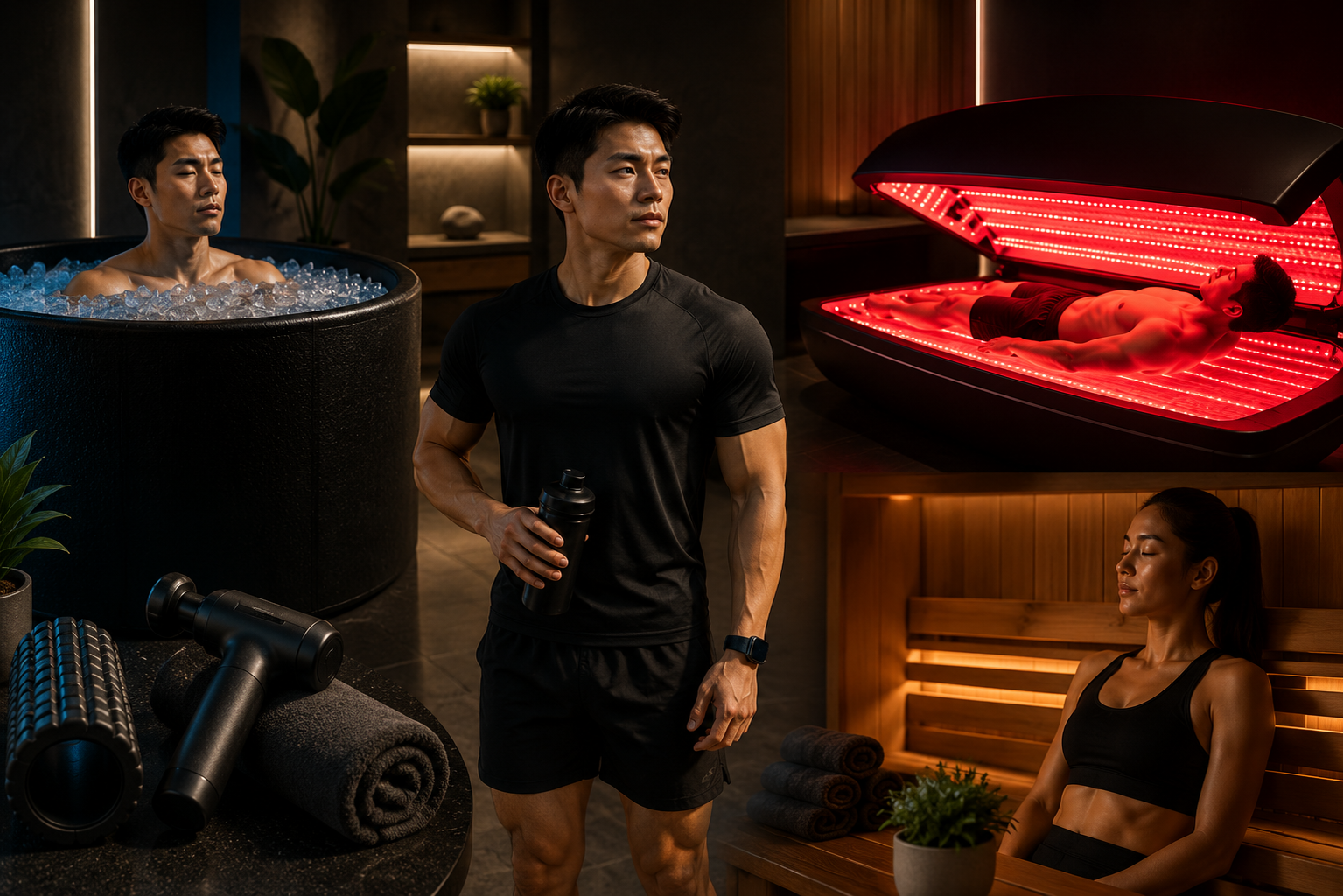
Modern recovery therapy represents a highly specialized, science-backed discipline focused on accelerating the body’s natural cellular healing mechanisms. Instead of waiting days for passive rest to take effect, these targeted modalities actively optimize blood flow, clear out metabolic waste, and stimulate cellular regeneration. Key practices include cold plunge therapy, red light therapy, traditional dry heat saunas, compression garments, and structured mobility work.
Why Is Recovery Therapy Growing Rapidly in Singapore?
Our fast-paced urban environment naturally creates a high-stress lifestyle that demands advanced, efficient solutions for physical maintenance. As biohacking trends and longevity wellness movements gain mainstream popularity, local professionals are taking charge of their biological data. This growing wellness culture has transformed recovery from a reactive injury treatment into a proactive daily asset for life optimization.
How Does a Structured Routine Impact Metabolic Wellness?
What Exactly Is Metabolic Wellness?
Metabolic wellness represents your body’s fundamental ability to generate, process, and utilize cellular energy efficiently. It directly governs how well you balance blood sugar levels, regulate systemic inflammation, modulate stress hormones, and cycle through deeply restorative sleep. When your metabolic health operates at its absolute peak, your body experiences steady vitality without mid-day crashes.
How Does Poor Recovery Adversely Affect Your Metabolic Health?
Neglecting physical and mental recovery subjects your body to chronic, unmanaged stress and persistent internal inflammation. This harmful state disrupts insulin sensitivity, elevates systemic cortisol levels, fractures sleep architecture, and leaves your cellular engines feeling entirely depleted. Over time, this metabolic imbalance sabotages your fitness progress and leaves you highly vulnerable to long-term fatigue.
- Persistent Low Energy: Cellular energy production drops significantly, causing severe mid-day fatigue and a dependency on artificial stimulants.
- Fragmented Sleep Cycles: Chronically elevated stress hormones prevent your brain from entering the deep, healing stages of nightly sleep.
- Accumulated Stress Overload: The body remains locked in a high-alert state, which weakens your immune defenses and impairs mood stability.
- Impaired Tissue Repair: A lack of metabolic support stalls your physical recovery, leaving your joints and muscles continuously weak.
How Does Cold Plunge Support Recovery and Performance?
What Happens to the Body During Cold Exposure?
Stepping into a specialized cold plunge triggers an immediate, survival-driven systemic shift throughout your entire body. The extreme cold causes rapid peripheral vasoconstriction, driving blood away from your skin surface and deep into your vital internal organs. Once you exit the freezing water, this oxygen-dense blood rushes back out, creating a powerful, rejuvenating circulatory flush.
Why Is Cold Plunge Therapy Popular for Recovery?
Fitness enthusiasts use cold immersion to rapidly lower their core body temperature and clear metabolic waste after tough workouts. This intense thermal stimulus reduces localized joint swelling, numbs acute pain signaling, and delivers a massive surge of refreshing mental alertness. It serves as an exceptional tool for optimization, teaching your autonomic nervous system to stay perfectly calm under acute stress.
Can Cold Plunge Therapy Support Metabolic Wellness?
Yes, deliberate cold exposure forces your body to work efficiently to maintain its core temperature, which activates beneficial brown adipose tissue. This specific metabolic activation burns calories, enhances systemic insulin sensitivity, and helps regulate your body’s overall inflammatory response. To experience these professional benefits firsthand, you can explore our premium amenities through our cold plunge service.
- Accelerated Recovery Routines: Significantly shortens your downtime between intense training blocks, allowing you to train harder and more frequently.
- Profound Mental Clarity: Triggers an immediate, long-lasting release of neurotransmitters like norepinephrine to sweep away afternoon brain fog.
- Robust Stress Resilience: Trains your mind and nervous system to remain deeply composed when facing unexpected external stressors.
- Post-Workout Recovery Optimization: Flushes out trapped cellular debris and accumulated lactic acid to eliminate deep, localized muscular stiffness.
How Does Red Light Therapy Support Recovery and Longevity?
What Is Red Light Therapy?
Red light therapy utilizes precise, clinically calibrated wavelengths of red and near-infrared light to safely penetrate deep past your skin layers. This non-invasive treatment delivers healing light photons directly to your underlying muscles, connective tissues, and joints without generating excessive surface heat. It provides a highly relaxing experience that works at a foundational level to restore your physical vitality.
How Does Red Light Therapy Support Cellular Recovery?
The specialized light photons match perfectly with the photoreceptors in your mitochondria, which are the primary power plants inside your cells. This interaction directly supercharges the production of adenosine triphosphate (ATP), giving your cells the necessary fuel to repair themselves at an accelerated rate. Increased ATP production maximizes performance recovery, eases oxidative stress, and boosts local micro-circulation to bring fresh nutrients to damaged areas.
Why Is Red Light Therapy Popular for Wellness and Longevity?
Modern longevity wellness practitioners recognize that healthy aging depends entirely on maintaining structural integrity at a cellular level. By applying these specific light wavelengths regularly, individuals can manage chronic low-grade inflammation, support natural collagen synthesis, and accelerate soft tissue healing. You can learn more about our state-of-the-art systems on our red light therapy service.
Advanced Muscle Recovery: Speeds up the natural repair of microscopic muscle tears caused by heavy weightlifting or high-endurance sports.
- Enriched Wellness Routines: Provides a clean, non-invasive method to lower full-body inflammation and enhance daily systemic health.
- Enhanced Relaxation Benefits: Calms a frantic, overworked nervous system, allowing for smoother transitions into deep, restorative sleep.
- Long-Term Longevity Support: Protects cartilage, strengthens fragile tendons, and maintains overall joint mobility as you age.
Can Recovery Therapy Improve Longevity Wellness?
Why Is Longevity Closely Linked to Recovery?
Living a long, vibrantly active life requires you to minimize the accumulation of chronic, unmanaged cellular damage over time. However, when you neglect recovery, ongoing systemic inflammation and elevated stress hormones break down your tissues and accelerate biological aging. Therefore, prioritizing structured recovery therapy protocols ensures your body continually repairs this minor damage before it manifests as chronic issues.
What Is the Precise Role of Recovery in Healthy Aging?
Dedicated recovery practices keep your muscle fibers highly pliable, protect your joint cartilage, and ensure your circulatory network functions flawlessly. This proactive maintenance preserves your functional mobility and baseline energy levels, allowing you to pursue your favorite sports for decades. True longevity wellness is built upon consistent, daily choices that support your body’s natural self-healing capabilities.
Why Nervous System Recovery Matters for Performance Optimization?
Physical vs. Nervous System Fatigue
Many individuals mistake central nervous system fatigue for simple, localized muscular exhaustion after a heavy training block. While physical fatigue presents as heavy limbs and sore muscles, nervous system fatigue presents as low motivation, poor concentration, and sleep issues. If your brain is exhausted from chronic stress, your muscles cannot receive the strong bio-electrical signals required for peak physical performance. As a result, both physical output and recovery may suffer.
Why Is Recovery Crucial for High-Level Mental Performance?
Your brain and your body are intrinsically bound together by the vast, intricate network of the autonomic nervous system. Investing time in targeted recovery therapies actively down-regulates a hyper-reactive mind, melting away cognitive burnout and severe mental fatigue. This profound relaxation provides an executive reset, ensuring you return to your workplace with sharp focus and optimal decision-making abilities.
- Sharper Mental Clarity: Eliminates the mental fatigue and brain fog that naturally accumulate after hours of intense corporate work.
- Deeper Sleep Quality: Calms your internal nervous pathways so your brain can maximize time spent in deep, restorative sleep cycles.
- Balanced Recovery Management: Prevents the onset of overtraining syndrome by keeping your sympathetic and parasympathetic states in perfect equilibrium.
- Sustainable Stress Management: Buffers your mind against unexpected daily pressures, preserving your valuable emotional energy.
How Do You Build a Recovery Routine for Long-Term Wellness?
What Does a Balanced Recovery Routine Look Like?
First and foremost, an effective, comprehensive recovery routine seamlessly blends everyday wellness habits with advanced, technology-driven therapies. Specifically, this means anchoring your lifestyle with deep sleep, precise hydration, and clean nutrition while scheduling targeted hot and cold exposures weekly. Furthermore, combining these elements provides your body with a powerful, multi-layered defense system against physical and mental exhaustion.
How Often Should You Utilize Modern Recovery Therapy?
For excellent, well-balanced results, most active individuals integrate dedicated recovery sessions into their schedules 2 to 3 times per week. You can align these therapeutic sessions with your most intense training days or use them on your rest days to keep your circulation moving. Listen closely to your body’s unique signals and adjust your recovery frequency to match your current lifestyle demands.
Why Does Consistency Matter Far More Than Intensity?
Exposing your body to random, extreme bursts of hot or cold therapy yields very little long-term physiological benefit. True, lasting biological adaptations, like improved vascular health and lowered baseline cortisol, require small, regular doses of deliberate thermal stress. Establishing a predictable, consistent recovery routine builds a robust physical foundation that keeps you feeling energized and injury-free.
Why Is Biohacking and Recovery Culture Growing Rapidly?
The Substantial Rise of Wellness and Biohacking Culture
Singapore’s health-conscious community is moving rapidly away from old-school, reactive medical treatments in favor of data-driven human optimization. Local fitness enthusiasts are utilizing advanced technology to actively monitor their sleep patterns, heart rate variability, and metabolic efficiency. This massive cultural shift has positioned specialized thermal and light-based therapies as foundational tools for achieving peak physical performance.
Why Busy Corporate Professionals Are Investing in Recovery
In our fast-paced city, high-performing executives face immense, unrelenting cognitive pressure and exhausting work weeks. To maintain an elite level of professional focus without sacrificing health, corporate leaders use advanced recovery to rapidly clear mental stress. These specialized therapies fit seamlessly into busy modern schedules, providing maximum physical restoration in minimal time.
Singapore’s Deeply Growing Interest in Longevity Wellness
With a collective focus on extending our healthy lifespan, local communities are prioritizing long-term physical mobility and metabolic health. Furthermore, people recognize that staying active and vibrant in later decades requires a dedicated commitment to joint and cellular maintenance today. Advanced recovery therapies provide the essential infrastructure needed to support a long, highly energetic lifestyle.
Experience Elite Recovery Therapy at RAPIDÉ
RAPIDÉ stands as Singapore’s premier luxury wellness sanctuary, offering a meticulously designed, clinician-curated environment focused entirely on your physical restoration. We house state-of-the-art cold plunges alongside authentic, traditional Finnish saunas to provide an unparalleled contrast therapy experience. Moreover, every protocol we offer is fully structured to optimize your cardiovascular health, accelerate cellular repair, and calm your nervous system. Whether your goal is bouncing back from an intense training block or escaping the relentless stress of urban life, our peaceful sanctuary provides the ultimate space to restore your vitality. Experience the transformational impact that professional, science-backed recovery makes for your daily energy, athletic longevity, and performance.
Take complete control of your physical longevity and unlock your body’s true performance potential today. Discover our tailored solutions for recovery for athletes, or book your custom session on our specialized contrast therapy to experience deep cellular healing.
Frequently Asked Questions About Recovery Therapy
Recovery therapy represents a specialized, evidence-based discipline that utilizes advanced physical modalities to accelerate the body’s natural cellular healing processes. Rather than relying on passive rest alone, it uses targeted techniques like cold immersion, deep infrared or dry heat exposure, and specific light wavelengths. These methods maximize circulation, reduce tissue inflammation, balance nervous system fatigue, and restore physical energy profiles efficiently.
Yes, a structured recovery routine directly elevates your athletic performance by dramatically reducing the downtime required between intense physical workouts. Rapidly healing structural muscle tears and removing metabolic waste products allows you to return to your training sessions far sooner. This consistency optimizes your strength gains, improves endurance capacity, and protects you against debilitating overuse injuries.
Cold immersion stands as one of the most effective, scientifically validated tools available for crushing acute post-workout muscle soreness and tissue inflammation. The ice-cold water causes immediate vasoconstriction, which actively pushes cellular debris away from your fatigued extremities. When you exit the plunge, fresh, oxygenated blood floods your muscle tissues to jumpstart the healing process.
Yes, red light therapy works at a fundamental cellular level by delivering healing light photons deep into your underlying muscle tissues. These photons stimulate the mitochondria to increase ATP production, providing your cells with the precise energy required to repair themselves quickly. This advanced cellular support significantly limits post-exercise muscle soreness, enhances tissue elasticity, and accelerates overall recovery.
Yes, advanced recovery therapies play a massive role in regulating chronic stress hormones and reducing systemic inflammation throughout the body. Lowering baseline cortisol levels and optimizing sleep patterns directly improves your body’s insulin sensitivity and energy expenditure. This consistent physiological support ensures your metabolic pathways function cleanly, preventing sudden energy crashes during the day.
Long-term longevity depends entirely on your ability to continuously manage minor cellular stress before it develops into permanent structural damage. Regular use of specialized recovery modalities controls low-grade inflammation, preserves joint mobility, and maintains optimal cardiovascular health as you age. Prioritizing active recovery today ensures your body remains vibrantly functional and full of energy for decades to come.
Most individuals achieve exceptional, highly sustainable health benefits by scheduling targeted recovery sessions 2 to 3 times per week. This frequency allows you to manage the physical strain of your busy work week or intense exercise routine without overtaxing your system. Always listen closely to your body’s feedback and scale your recovery sessions to match your current stress levels.
Yes, recovery therapies are experiencing a massive surge in popularity across Singapore as local communities embrace proactive biohacking and longevity wellness trends. Busy corporate executives and fitness enthusiasts use these advanced modalities to manage fast-paced urban lifestyles. It has grown into an essential lifestyle practice for anyone looking to balance high-pressure careers with peak physical health.
Yes, specialized hot and cold therapies provide a powerful physical stimulus that actively down-regulates an overstimulated, hyper-reactive sympathetic nervous system. This intentional exposure triggers a deep shift into a peaceful parasympathetic state, which drops baseline anxiety and clears mental fatigue. It leaves you feeling deeply relaxed, mentally grounded, and emotionally resilient.
Combining deliberate cold plunge therapy, traditional dry heat saunas, whole-body cryotherapy, and advanced red light therapy provides the most complete framework for full-body optimization. Alternating between hot and cold environmental conditions conditions your vascular system, while targeted light wavelengths repair your body at a cellular level. Utilizing these advanced treatments together ensures your mind, muscles, and metabolic pathways recover simultaneously.
Conclusion
Sustaining a highly successful, active lifestyle in a demanding urban environment like Singapore requires an absolute commitment to your physical recovery. True healthspan, daily mental focus, and peak physical performance cannot be achieved through hard training or relentless work alone; they depend entirely on how effectively you allow your body to heal. Advanced recovery therapy serves as the vital foundation that connects your day-to-day output with long-term metabolic health and structural longevity. Modalities like professional cold plunging and targeted red light therapy are highly efficient tools that allow you to take complete control of your biological well-being. Stop treating physical rest as an optional luxury, and start treating your restoration as an active investment in your future. Book a personalized discovery session at RAPIDÉ today, and experience how our clinician-curated recovery protocols can completely transform your health journey.