
How Athletes Use Glucose Monitoring for Performance Recovery
Introduction: The Molecular Frontier of Athletic Excellence
Every elite athlete in Singapore knows that a training program is only as effective as the recovery protocol supporting it. You can execute the most scientifically structured intervals along Marina Bay or lift with absolute precision in the gym.
Yet, if your body lacks the precise biochemical resources required to rebuild at a cellular level, your hard work will stall. Muscle soreness lingers, morning power output drops, and cognitive focus fades during demanding corporate hours.
For years, sports scientists tracked recovery through external metrics like heart rate variability (HRV), sleep duration, and training volume. While these tools remain incredibly valuable, they fail to track real-time fuel delivery and systemic metabolic stress.
This gap has triggered a massive shift toward precision biowearables among local triathletes, competitive Cross Fitters, and hybrid athletes.
To consistently break past physical plateaus, you must answer a vital performance question: How do Athletes track their glucose levels for maximum performance recovery? By tracking competitors can move past generic nutritional timelines. Instead, they gain actionable, live insights to optimize glycogen replenishment, eliminate energy drops, and accelerate deep tissue repair.
What Is Glucose Monitoring for Athletes?
Why Are Traditional Fueling Plans Failing Modern Competitors?
To understand how real-time biochemistry can change your training adaptations, we must look at the limitations of standard sports nutrition. For decades, athletes relied on rigid, generalized guidelines: consume a set number of carbohydrates per kilogram of body weight, or drink a generic sugary sports beverage exactly thirty minutes before training.
The major flaw in this approach is that it treats every human metabolism like an identical machine. However, your unique glycemic response is highly dynamic.
It changes based on your current stress levels, sleep architecture, gut microbiome, and baseline insulin sensitivity. A recovery meal that provides a steady, sustained release of fuel for one athlete might trigger an extreme blood sugar spike and subsequent energy crash in another.
The Shift from Static Snacking to Live Biochemical Data
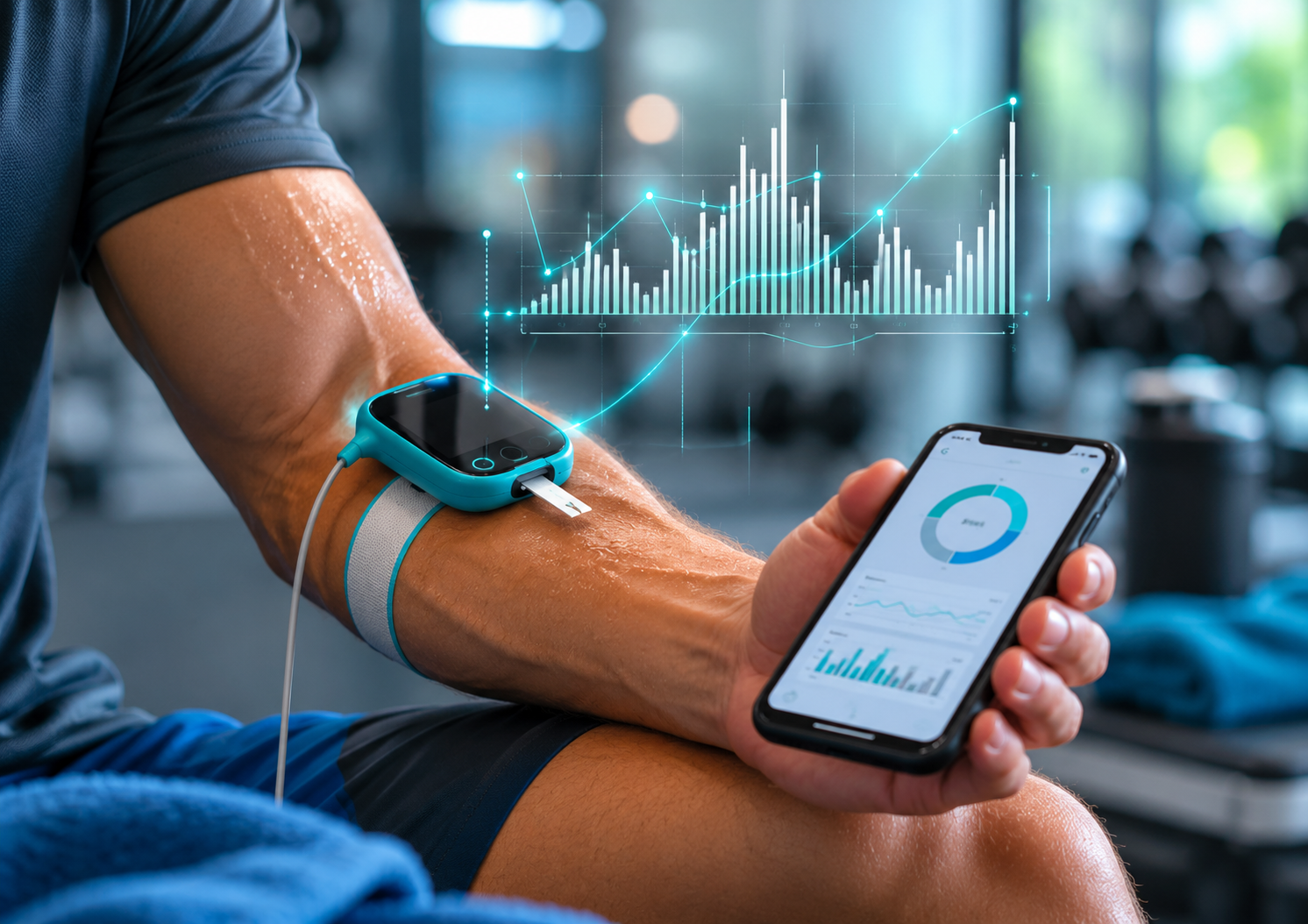
Using a continuous glucose monitor transforms nutrition from an ongoing guessing game into an exact science. A CGM is a small, water-resistant sensor that sits flush against the skin, continuously tracking glucose concentrations within your interstitial fluid.
Instead of an isolated finger-prick snapshot, it streams an unbroken, real-time wave of metabolic data directly to your smartphone. This clear visibility shows you exactly how your body processes fuel during heavy training blocks, high-stress corporate environments, and deep overnight rest.
How Athletes Use Glucose Monitoring for Performance Recovery
Mapping the Post-Workout Glycogen Replenishment Window
The primary reason top competitors prioritize glucose monitoring for athletes is to maximize the speed and efficiency of muscle glycogen replenishment. During an intense workout, your muscles rely heavily on stored glycogen to generate explosive power and sustain cardiovascular output. Once your training session ends, your body enters a highly receptive state where it seeks to pull glucose from the bloodstream to restock these depleted reserves.
By monitoring your live data stream, you can observe exactly when your post-workout glucose clearance rate peaks. Consuming targeted, clean carbohydrates during this high-sensitivity window ensures that the nutrients are driven directly into your muscle cells for repair, rather than lingering in circulation or being stored as adipose tissue. This precise timing drastically cuts down your overall recovery window, allowing you to return to peak power output much faster.
Preventing the Over-Fueling Trap and Sudden Energy Crashes
Many athletes mistakenly believe that more carbohydrates always equate to better performance recovery. This mindset frequently leads to the over-fueling trap. Consuming an excessive amount of simple sugars after training can overload your system, causing a massive blood sugar spike.
In response to this spike, your pancreas is forced to release a large surge of insulin to clear the bloodstream. This massive hormonal response often causes a severe overcorrection known as reactive hypoglycemia. This sudden crash leaves you feeling completely exhausted, heavy, and plagued by brain fog.
Tracking your unique glycemic responses allows you to fine-tune your macronutrient portions. This data helps you keep your post-workout curves smooth and controlled, ensuring steady energy without systemic disruption.
The Impact of High Glucose Variability on Tissue Repair
Why Do Blood Sugar Crashes Prolong Muscle Soreness?
To build a highly resilient body that recovers quickly, you must learn to actively manage your glucose variability. This metric tracks the speed and magnitude of your blood sugar fluctuations over a 24-hour cycle. When your daily graph shows a volatile series of sharp peaks and deep valleys, your physical recovery is inherently compromised.
Sudden blood sugar crashes trigger a mild systemic stress response, commanding your adrenal glands to release cortisol to elevate your glucose baseline. Because cortisol is a catabolic hormone, its chronic elevation can actively hinder muscle protein synthesis and prolong deep muscle soreness (DOMS). Keeping your daily glycemic curve stable prevents these unwanted hormonal shifts, keeping your body in an optimal state for healing.
Mitigating the Glycation and Chronic Inflammation Loop
An unmanaged, highly volatile blood sugar profile drives a destructive biological process known as glycation. This occurs when excess glucose molecules bind permanently to proteins and structural tissues in your body, creating advanced glycation end-products (AGEs).
AGEs cause cellular stiffening, damage blood vessels, and trigger a low-grade inflammatory response from your immune system. When your body is forced to continuously clear these microscopic, diet-induced inflammatory fires, it has far fewer biological resources to dedicate to healing micro-tears in your muscle fibers or soothing strained connective tissues.
Stabilizing your daily glycemic baseline through smart tracking ensures that your immune system can focus entirely on accelerating your performance recovery.
Intra-Workout Fueling and Real-Time Performance Optimization
How Can Real-Time Glycemic Tracking Prevent Hitting the Wall?
For endurance athletes, long-distance runners, and high-intensity hybrid competitors, running completely out of energy – often called “bonking” or hitting the wall is a major obstacle. This sudden physical breakdown occurs when your immediate circulating blood sugar drops and your muscle glycogen stores are fully depleted.
Integrating data-driven habits allows athletes to catch these metabolic drops before they manifest as physical exhaustion. If you observe a steady, downward trend in your glucose baseline during a prolonged training block, it serves as an objective signal to consume target carbohydrates immediately.
This live insight ensures you keep your working muscles perfectly fueled, preventing premature fatigue and protecting your nervous system from deep exhaustion. For a deeper look at these protocols, review the comprehensive strategies detailed on continuous glucose monitoring for athletes.
Balancing Metabolic Flexibility Under Heavy Training Loads
A foundational indicator of long-term physical resilience is metabolic flexibility. This term describes your body’s capability to switch effortlessly between burning fats for fuel during low-intensity tasks and burning carbohydrates during high-intensity training.
If your metabolism is inflexible, your body becomes completely dependent on constant carbohydrate ingestion, making you highly susceptible to dramatic energy drops.
Using real-time tracking allows you to see how your body shifts between these distinct energy pathways during fasted training sessions or low-intensity recovery runs. Cultivating this metabolic agility teaches your system to conserve its precious glycogen stores for when you truly need explosive power, significantly enhancing both your endurance thresholds and your post-workout recovery speed.
To discover how these biochemical principles serve as the core anchor of a long-term wellness and performance plan, read our detailed guide on Metabolic Tracking and CGMs for Health and Performance in Singapore.
How Sleep Disruption and Autonomic Stress Alter An Athlete’s Baseline
The Invisible Impact of Nervous System Stress
Your metabolism does not operate in an isolated vacuum. It is deeply connected to your central nervous system. When you experience intense psychological stress, your sympathetic nervous system triggers a fight-or-flight response.
This state commands your body to release a flood of cortisol and adrenaline, which signals your liver to dump stored glycogen into the bloodstream to prepare for an immediate physical threat.
Because you are often sitting stationary at a desk or resting rather than expending this energy, this glucose remains unused in your blood, resulting in a pronounced spike followed by an energy-depleting crash. Spotting these non-training spikes on your tracker tells you exactly when to use targeted down-regulation habits before your systemic recovery becomes compromised.
Securing Restorative Sleep Through Nighttime Glycemic Stability
Your most profound physical tissue repair and growth hormone release occur during deep, slow-wave sleep cycles. However, nighttime glycemic instability is a primary, hidden cause of disrupted rest. Consuming heavy, high-glycemic meals late in the evening can cause a sharp overnight glucose surge followed by an early morning crash.
This sudden drop triggers an immediate adrenaline response, causing subtle micro-awakenings that disrupt your deep sleep architecture without you even realizing it.
Evaluating the direct relationship between your evening nutrition, sleep and recovery metrics allows you to establish clear dietary boundaries. Ensuring your blood sugar stays flat and stable throughout the night preserves your parasympathetic nervous system state, maximizing your body’s natural healing capacity.
Biohacking Singapore: Pairing Glucose Insights with RAPIDÉ
Biometric data provides immense value, but it only transforms your physical performance when paired with targeted, physical action. When your tracking data reveals signs of elevated systemic stress, high glucose variability, or sluggish post-workout clearance, you need advanced, clinical treatments to restore systemic balance. At RAPIDÉ Singapore, we provide clinician-curated modalities designed to complement your data-driven lifestyle.
Frequently Asked Questions
Athletes use real-time glucose graphs to discover the precise timing for their post-workout meals, optimize glycogen replenishment, prevent performance-ending energy crashes, and minimize training-induced inflammation.
Glucose variability measures the magnitude and speed of your blood sugar rises and falls across the day. Keeping this variability low prevents cortisol surges, reduces systemic inflammation, and speeds up muscle healing.
Yes. Intense mental or emotional stress triggers your body to release cortisol and adrenaline. These catabolic hormones command your liver to dump stored glucose into your blood, creating a spike even if you are fasting.
If your blood sugar crashes overnight due to an evening glucose spike, your body releases adrenaline to stabilize it. This hormonal surge causes micro-awakenings that disrupt your deep sleep cycles and impair tissue repair.
Cold plunges help down-regulate an overstimulated sympathetic nervous system, reduce training-induced inflammation, and activate brown fat, which burns circulating glucose to generate body heat.
High insulin sensitivity ensures that your muscle cells can easily absorb circulating glucose and amino acids after a workout, allowing for rapid glycogen replenishment and faster muscle tissue repair.
Conclusion: Take Control of Your Performance Blueprint
Your athletic recovery should never be left to generic advice, unverified guessing, or copy-paste dieting trends. These can often leave you trapped in a frustrating loop of chronic muscle soreness, unexpected mid-afternoon energy slumps, and delayed fitness progress.
When you understand the science of tracking your glucose level, you gain access to an objective, real-time map of your internal health. This digital data removes the guesswork from your lifestyle choices, showing you exactly how food, sleep, stress, and exercise alter your biology.
Data truly comes to life when it is paired with targeted physical action. By combining your real-time tracking insights with the clinician-curated recovery modalities at RAPIDÉ Singapore.
Are you ready to stop guessing and start tracking your inner chemistry? Visit RAPIDÉ Singapore to pair your biodata with elite physical restoration. Take complete ownership of your training adaptations, recovery speed, and long-term vitality.
